Onboarding Kits for Canadian Teams: What to Send, When to Ship It and What the CRA Says
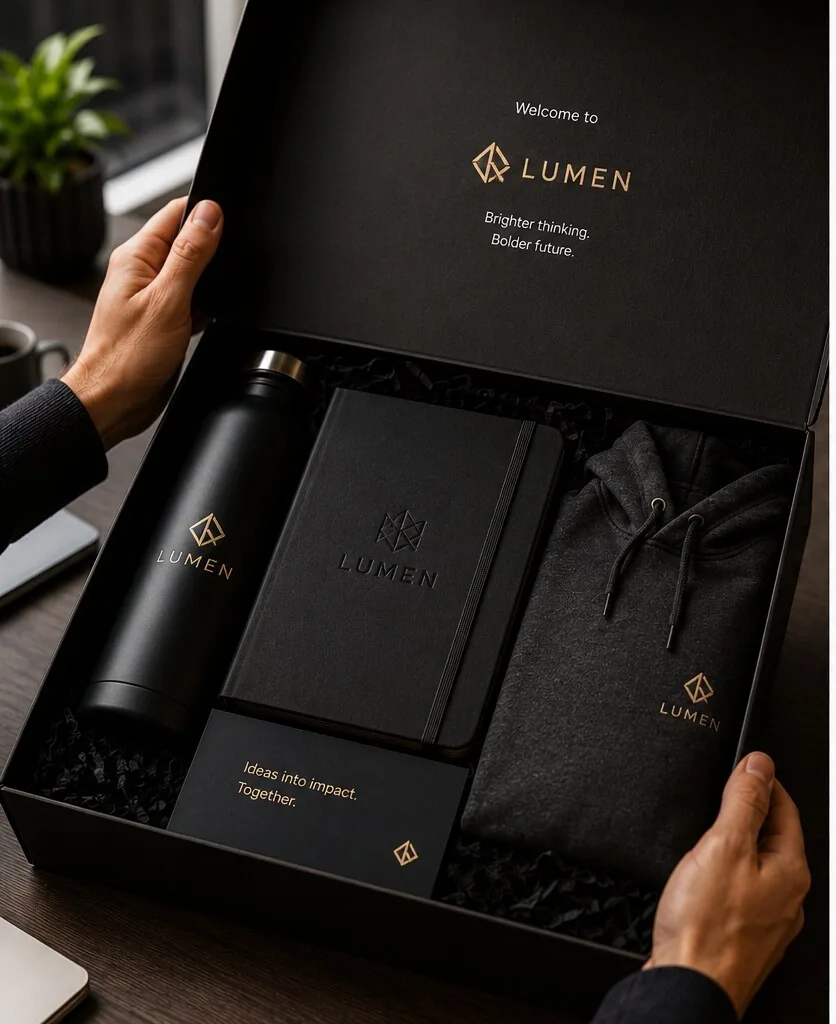
A welcome kit is the first thing a new hire holds that has your name on it. Usually before they've met most of the team.
That first impression either says "we were ready for you" or "someone remembered on Tuesday". The difference isn't the budget. It's whether the kit was planned as a program or put together in a hurry for each person.
Here's how to build one that works for a Canadian team, wherever your people are.
Day one starts before day one
The best welcome kits arrive the week before someone starts. It's the moment between signing the offer and the first morning, when people are excited and a little nervous, and a box at the door does more than the same box on a desk.
That matters more now that plenty of first days don't happen in an office. About one in five employed Canadians works fully or partly from home, according to Statistics Canada's Labour Force Survey. For those hires, the kit isn't a nice extra. It's the office.
So work backwards from the start date:
- When the offer is signed: collect their size and shipping address, and confirm it's somewhere they'll actually be.
- About two weeks out: pack and ship. Kits going to remote or northern addresses go first.
- The week before they start: it arrives. Their manager sends a two-line note saying it's on the way.
That only works if the kits are ready before you hire anyone, which is the whole argument for running this as a program.
What to put in it, by budget
These are per kit, before shipping, and they're starting points rather than a price list.
Around $50 to $75. One thing they'll wear, one thing they'll use every day. A good tee or toque, a quality tumbler, a short note from their manager. Small, but done well.
Around $75 to $150. The workhorse range. A hoodie or quarter-zip they'll actually wear, drinkware, a decent notebook, packed in a box designed to be opened. This is where most growing teams land.
$150 and up. A premium layer from a retail brand, a tech piece for their setup, and packaging that feels like a present. Worth it for senior hires or small teams where every person counts.
Whatever the budget, the note does more than any product. "Glad you're here, see you Monday" from their actual manager beats a printed welcome letter from the CEO.
Solve the size problem once
The most common welcome kit mistake isn't the product. It's the hoodie that doesn't fit.
Ask for sizes when the offer is signed, not two days before they start. Or skip the guessing and give each new hire a simple link where they pick their size, or choose between two or three items, and confirm their address. It's the same idea as a small company store, and it takes the follow-up emails off HR's plate.
Shipping across Canada
A kit from Mississauga to Toronto and a kit to a small town in northern BC are different shipments. Ship the hard-to-reach addresses first, and keep the kit to one box so nothing turns up separately.
Hold the stock in Canada. Kits shipped from the US cross a border every single time, and some arrive with taxes or duties for the new hire to pay at the door. That's not the first impression anyone is going for.
If your new hire is in Quebec, the card and anything written to them should be in French. Quebec's Charter of the French language requires employers to use French in written communications to staff, and product packaging and inserts have French requirements of their own. Keep a French version of the card and insert ready, and it's never a scramble.
What the CRA says
The CRA lets employers give non-cash gifts and awards worth up to $500 a year without them becoming a taxable benefit. More usefully for welcome kits, its guidance on gifts and awards says small items of trivial value, such as T-shirts and mugs, don't count toward that limit at all.
So a kit of branded staples is usually simple. A premium jacket or a pair of headphones is a different conversation, and worth a quick check with payroll. This is a plain-English summary, not tax advice.
Run it as a program
The teams that do this well decide once, not every time someone is hired.
- Pick the kit. One standard kit, maybe a second tier for leaders.
- Forecast the year. How many hires, roughly, and when.
- Hold the stock. Enough for the next two or three months, in the common sizes.
- Send us each new hire. Name, size, address, start date. We pack and ship.
- Review it twice a year. Keep what people post about. Drop what nobody mentions.
Do that, and every new hire gets the same good first day, whether they're hire number five or number five hundred.
Where to start
Count how many people you expect to hire in the next twelve months, and where they'll be. That one number shapes the budget, the stock and the kit.
Send it to us in the short form below, with a rough budget per kit, and we'll come back within 48 hours with three kit ideas built around your team. You can also see how our programs work on the employee onboarding kits page.
Not ready for a call?
Get three ideas in 48 hours.
Tell us who it’s for, how many people and roughly what you want to spend. Someone on our team sends back three ideas built around it, with rough pricing and whether each one lands in time. Not a catalogue link.
Inskribo IQ
Ready to build merch that people actually remember?
Whether you’re launching a new brand, planning an event, building a company store, or creating employee experiences—we’d love to help.